Keeping a CubeSat
alive in vacuum.
A passive thermal-protection system for a 2U CubeSat — MLI blankets, silver-Teflon radiators, and a conduction path that pulls a 230 °C hot case down to 118 °C and holds the cold case in band. Selected as a NASA HUNCH national finalist and presented at Johnson Space Center.
- 230→118°C
- Hot-case internals
- Finalist
- NASA HUNCH · 200+ teams
- $100
- Total budget
- 20
- Test trials verified
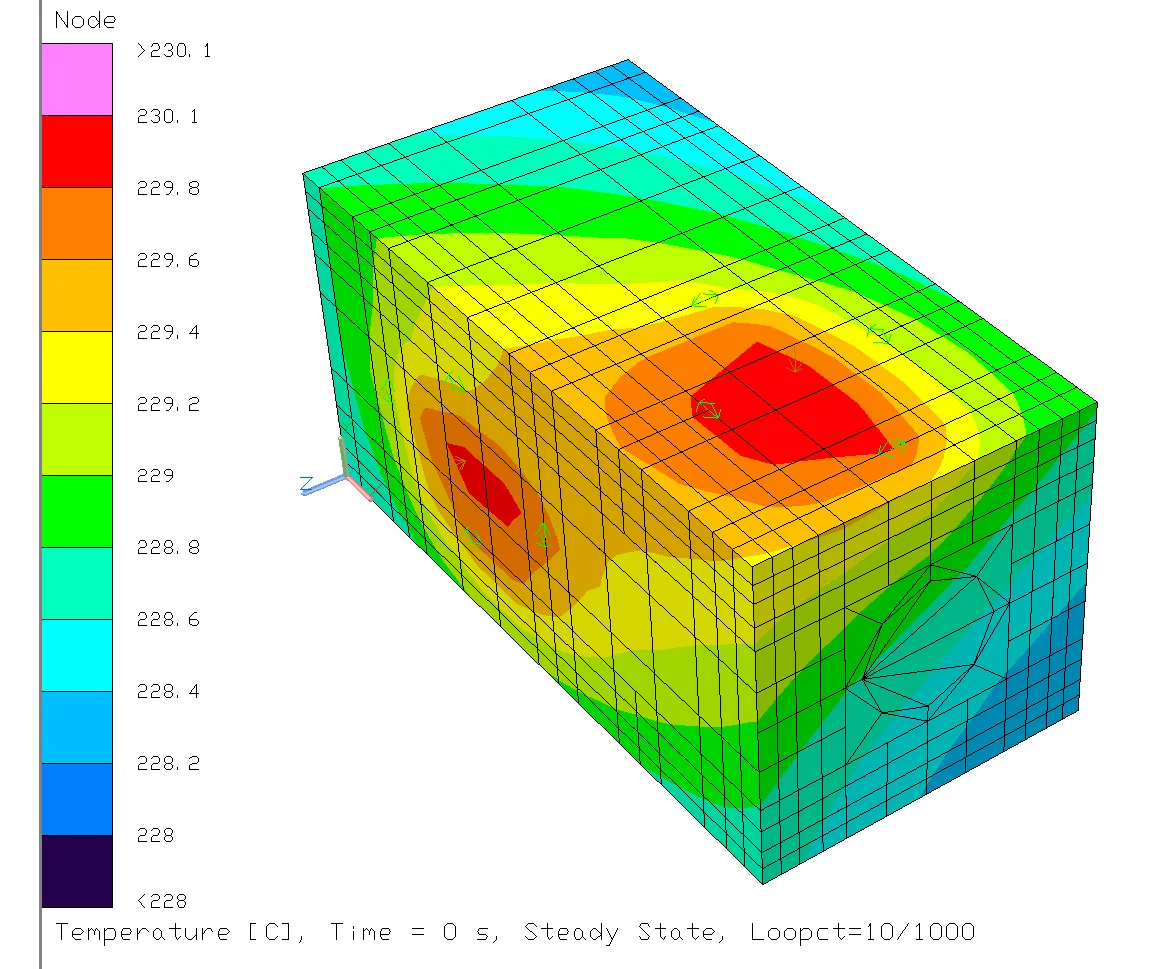
In vacuum there is no air to carry heat away — a satellite can shed energy only by radiation. Under full solar load the electronics climb past 230 °C; in eclipse they crash below their limit. Keep them in band through both — passively, for $100.
Physics
No convection in vacuum — radiation is the only heat path in or out.
Hot case
Direct-sun electronics exceed 230 °C, far above their operating limit.
Cold case
In eclipse the satellite radiates away its heat and falls below limit.
Deployer
Rail-launched: material can't cover the CubeSat's edges.
Passive only
No active cooling — insulation, radiators, and conduction alone.
Budget & judging
$100 of genuinely space-grade materials, reviewed by NASA directors.
Two orbits, two kinds of problem
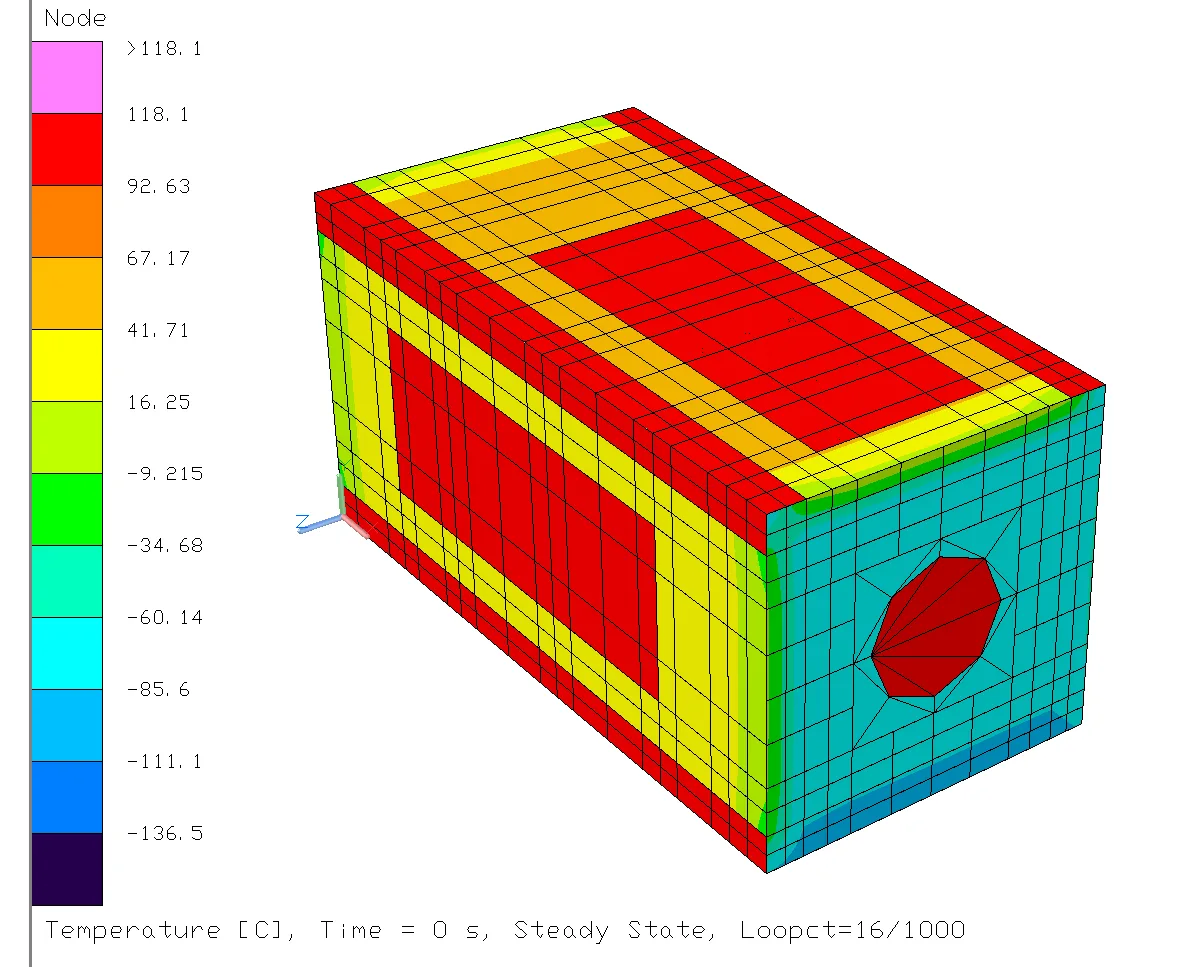
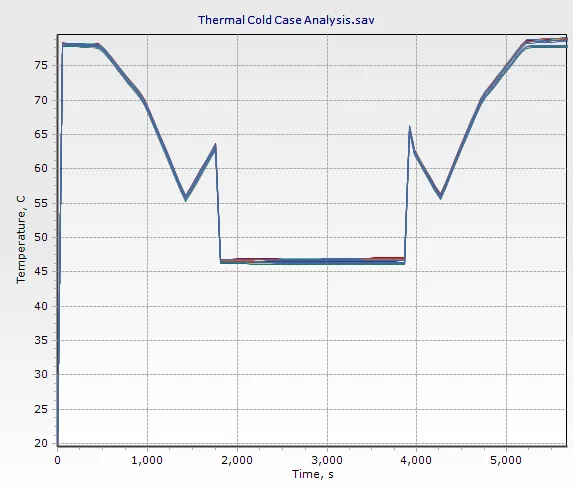
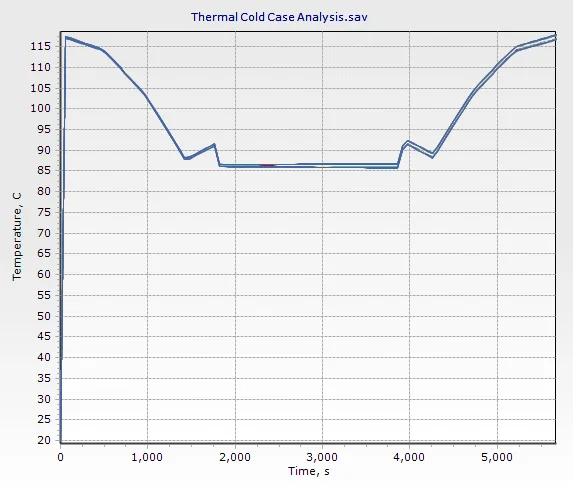
In the hot case the satellite holds a constant cross-section to the sun, so it settles to a single steady-state temperature map. In the cold case it passes in and out of eclipse, so its temperature changes over time — a transient that has to be plotted, not mapped.
From 230 °C to 118 °C
MLI blankets block the solar input while silver-Teflon radiators dump internal heat to space. The internal electronics — the parts that actually fail — fall from over 230 °C to 118 °C, back inside their operating limit.
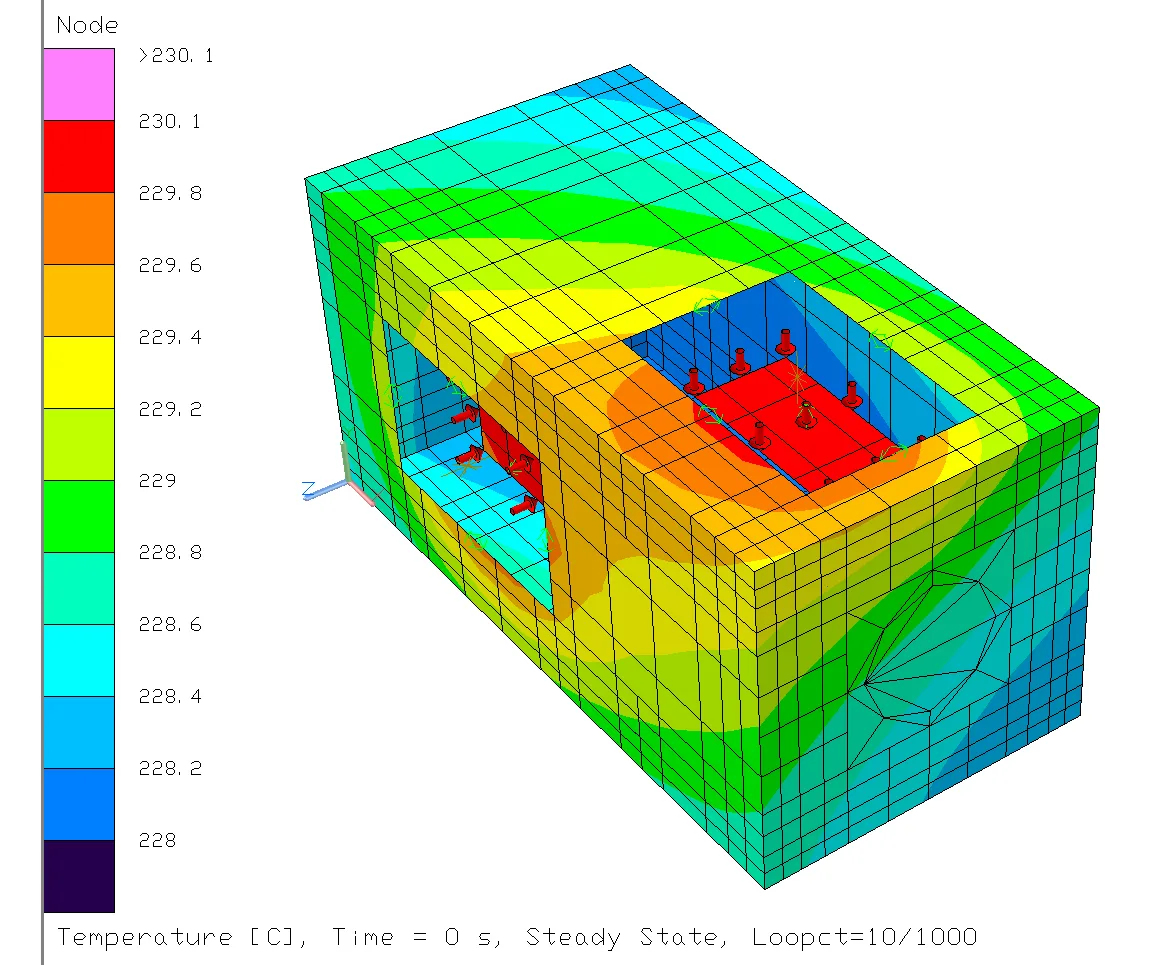
230 °CBefore · electronics over limit
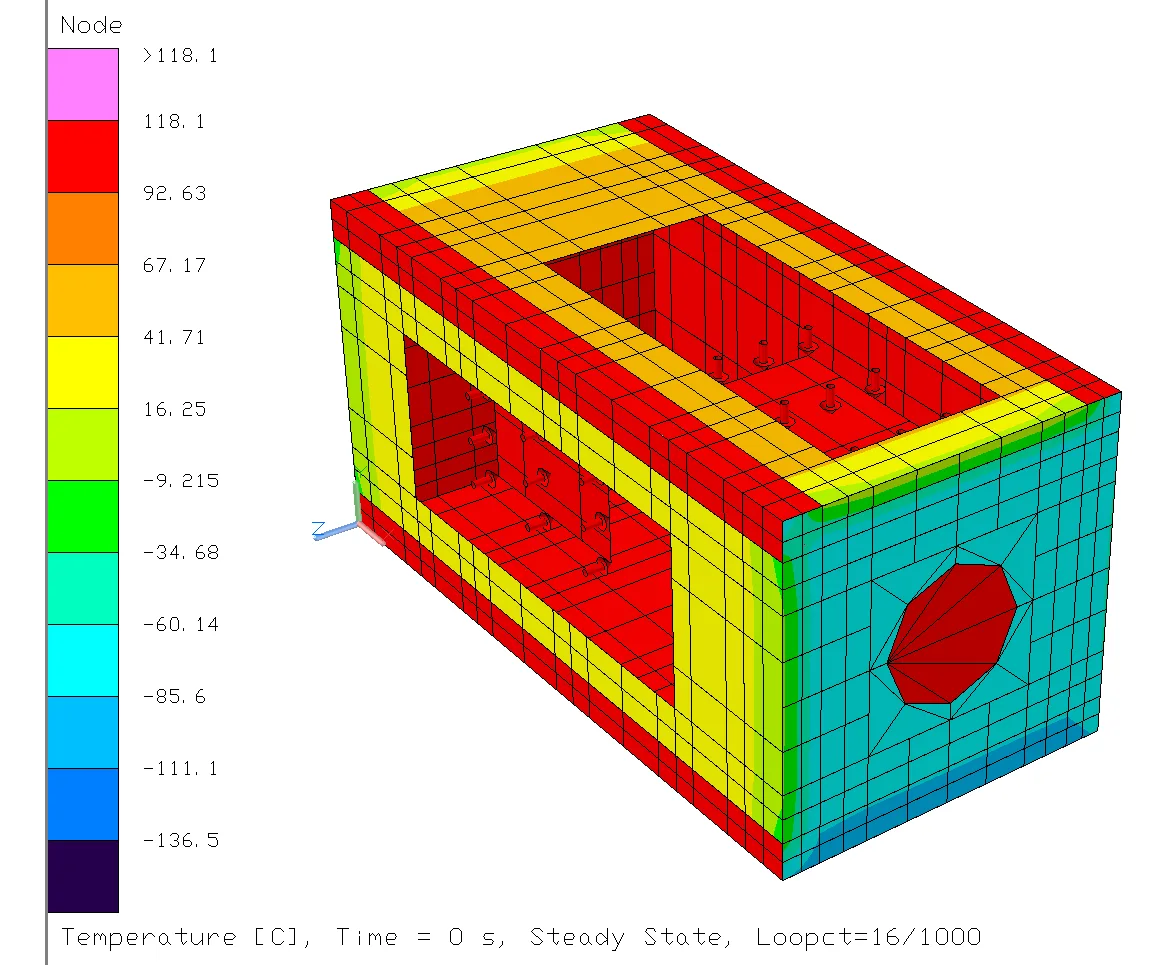
118 °CAfter · back in band
Holding heat through eclipse
The cold case is transient — temperature falls as the satellite crosses into shadow. Without insulation it radiates its heat away and drops below the operating floor. The MLI retains enough that the eclipse low holds around 85 °C, still in band.
Four parts, one heat path
An aluminum conduction block pulls heat off the processor into the body; silver-Teflon radiators reject it to space; MLI blankets isolate everything from the solar load. Every material is genuinely space-grade — within the $100 budget.
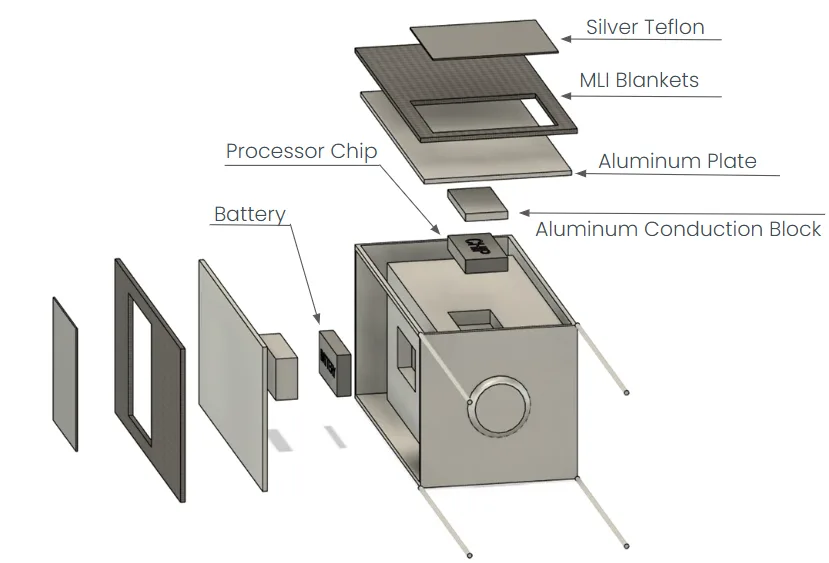
- Silver Teflon — low solar absorptance, high emittance radiator surface
- MLI blankets — multi-layer insulation blocking solar input
- Aluminum conduction block — heat path off the processor chip
- Aluminum body & plate — structural mass and spreader
Sizing the radiator from first principles
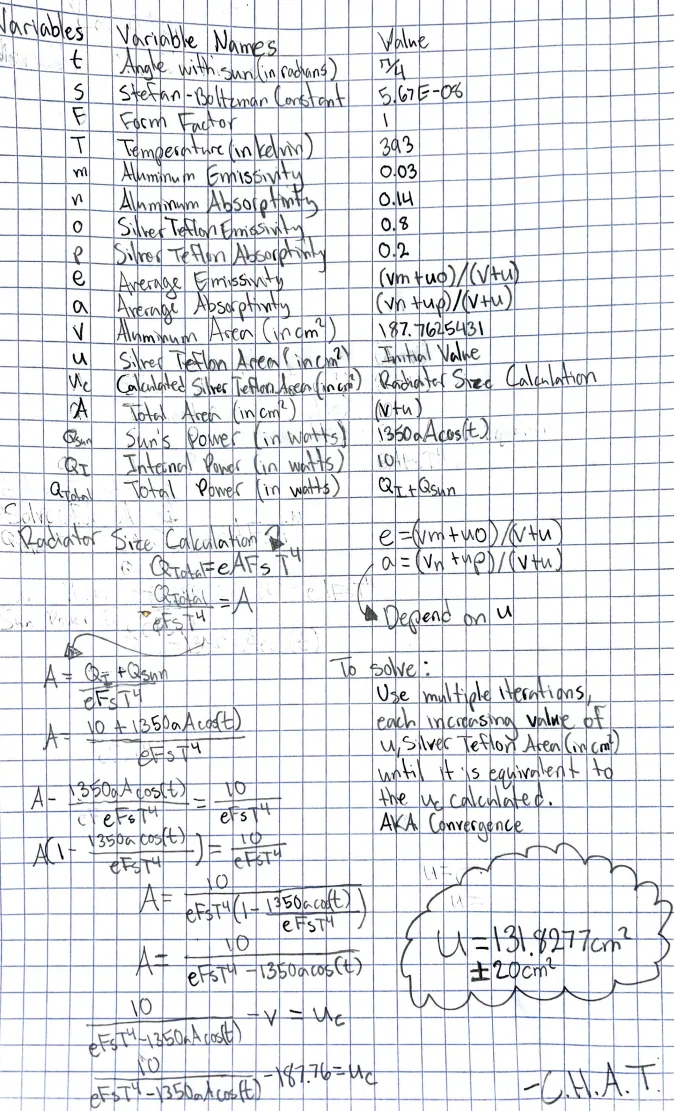
The radiator area falls straight out of a Stefan-Boltzmann energy balance — emitted power against absorbed solar load, solved for the area that holds the operating temperature. I worked the derivation by hand, then turned it into a live calculator so anyone can size a radiator for their own satellite.
Built it, then proved it
The design didn't stop at simulation. I built the real prototype with space-grade MLI and silver Teflon, then verified it across 20 thermal test trials in an insulated environment — sensors on the model, logging to a laptop, power monitored at the wall.
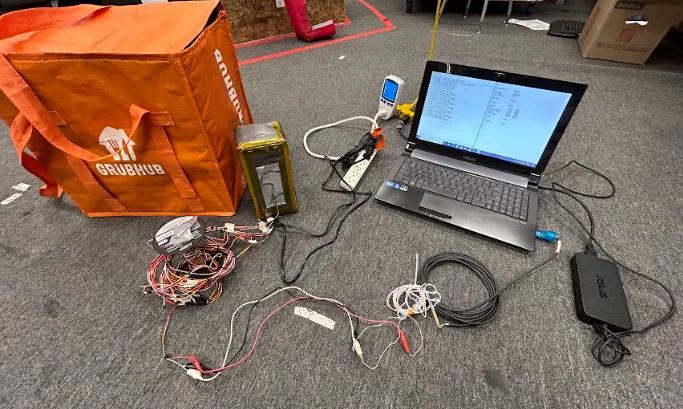
The full assembly — materials, costs, and the step-by-step build and test procedure — is documented in a manual you can read right here.
A finalist system that holds the band, both ways
- 230→118 °C
- Hot-case internals
- ~85 °C
- Cold-case eclipse low
- $100
- Total budget
- Finalist
- Of 200+ teams · JSC
What this demonstrates
What I took from it
The orbit dictates the analysis — steady state when exposure is constant, transient when it isn't — and the same insulation that fights the hot case is what saves the cold one. A passive system, sized from first principles and proven on real hardware, beat a problem that costs operators real money.